.jpg)
Tree care in Magnolia tx
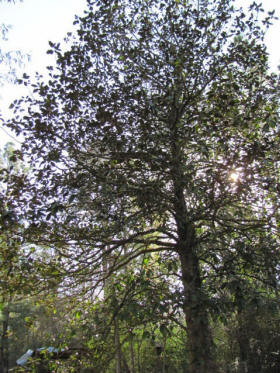
They are our favorite trees, the enchanting magnolia trees. Magnolia Trees light up your landscape every Spring and Summer with beautiful huge flower blossoms that just can't seem to be beat by any other flowers around. Alphacorps Tree and environmental care provides specialized tree care to the Memorial area, The woodlands ,Spring and Conroe. Were tree specialists.
The magnolia tree grows at a pretty steady pace and most of the deciduous magnolia don't get very large. They work well in a medium size yard with room to spare. They are very easy to maintain and need little care once established.
We provide service to the woodlands, memorial, the champions,spring and lake conroe.
Diseases
Magnolia trees in Houston are also subject to bacterial leaf spots caused by
bacterium or a large number of fungi. Leaf spots can be helped by
chemical controls. Rake up and dispose of infected leaves.
Canker diseases will kill branches. Cankers on branches can be pruned out. Keep
trees healthy with regular fertilization and by watering in dry weather.
Verticillium wilt may cause death of a few branches or may kill the tree. Prune
out dead branches and fertilize with high nitrogen fertilizer.
Scales of various types will infest twigs. Magnolia scale is the most common scale.
Insects
Various kinds of scale attack magnolia trees ,the magnolia scale, is a large scale. Adult females may reach nearly 1/2-inch in diameter when fully grown. The scale is shiny tan-brown and smooth. different types of scale may be different colors. As they get bigger, they are often covered with a white mealy wax. Later crawlers emerge.
Plants Attacked
As the name implies, this insect is primarily a pest of various species of magnolia. Saucer, star, lily and cucumber tree magnolias are the most common trees attacked.
Damage
Magnolia scales have sucking mouthparts and when heavy infestations completely encrust branches, the branches often die. Badly infested branches and twigs are weakened and growth is retarded. Leaves may also be under-developed. Under a continuous and heavy attack trees may be killed.
Like most soft scales, the excess plant sap is excreted is called honeydew. The honeydew drips onto the foliage and branches. A dark fungus, called black sooty mold grows on the honeydew which results in the leaves becoming blackened. The honeydew also attracts a ants, bees, wasps and flies which feed on it.
Description and Life Cycle
The magnolia scale spends the winter on one to two year old twigs as tiny, dark-colored nymphs. As temperatures warm in the spring, the scales begin to suck sap and have molted once by early May.
Need a tree doctor? We provide diagnosis and tree care services in Houston, Cypress , Memorial area , the heights, Atascocita, Spring, The champions, cypress fair banks, the Woodlands and magnolia. Were tree health experts. We can inspect and diagnose trees and treat trees for various diseases .